How Flock Safety Became America's Largest License Plate Surveillance Network
A camera network built to catch car thieves has grown into a searchable, cross-jurisdictional tracking system with almost no federal oversight, and cities are starting to push back.
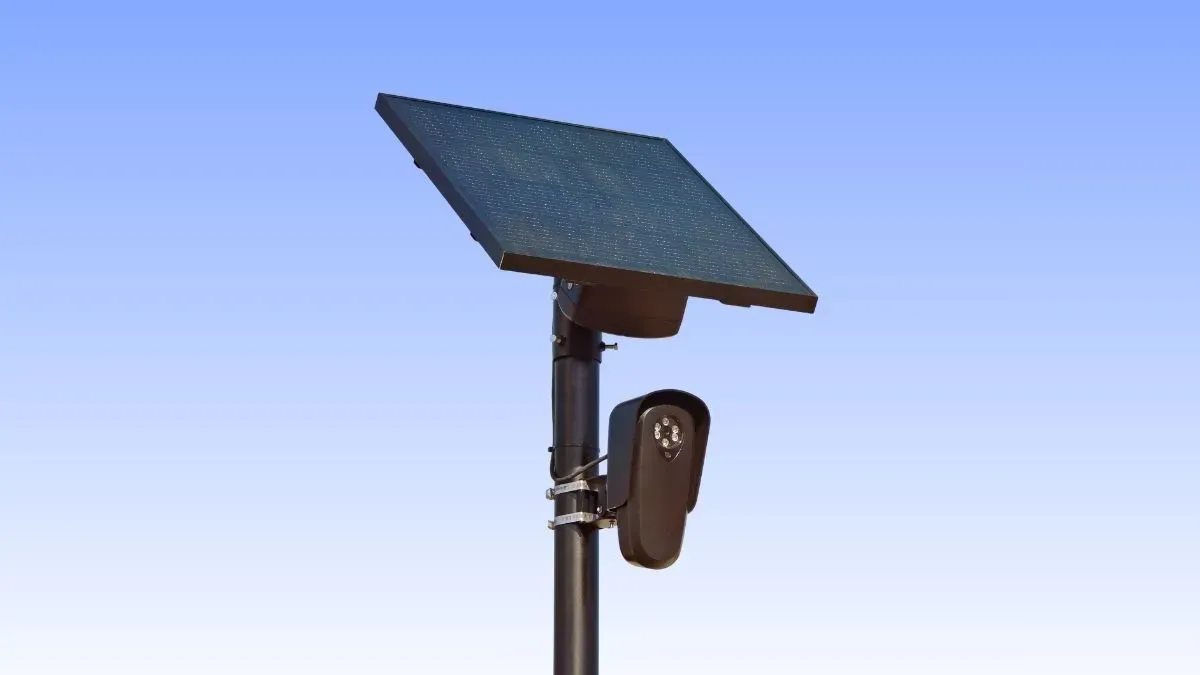
Flock Safety started in 2017 as a small side project. Its three founders, Garrett Langley, Matt Feury, and Paige Todd, built early camera prototypes by hand after a Georgia detective told Langley one of his devices had helped solve a break-in. That small validation turned into a company decision to go all in. Less than a decade later, Flock operates more than 100,000 automated license plate reader cameras under contract with thousands of law enforcement agencies across nearly every state. Independent crowdsourced mapping projects have counted even more, placing the total closer to 120,000 devices nationwide. The company's cameras now scan well over a hundred million vehicles a day, feeding a searchable, cloud-based database that can be queried across city and state lines.
The adoption case. Police departments have signed on to Flock for a straightforward reason: the technology is inexpensive relative to staffing, and it produces results. Departments credit the cameras with helping solve car thefts, locate missing people, and generate leads in violent crime investigations, often without adding a single additional officer. Because departments can search cameras beyond their own jurisdiction through sharing agreements, a lead in one city can be picked up almost instantly in another. Flock has said new agencies signing on continue to outpace the number that cancel, and the company points to specific solved cases, including stolen vehicle recoveries and manhunts, as evidence the system delivers real public safety value.
The backlash, concern by concern.
Warrantless, cross-jurisdictional tracking. Because Flock searches can span multiple agencies and states, a small department, or an officer with no direct connection to a case, can search a driver's movements nationwide without a warrant or individualized suspicion. Legal scholars have compared this to the reasoning in Carpenter v. United States, where the Supreme Court found that comprehensive location tracking without a warrant can violate the Fourth Amendment.
Documented misuse by individual officers. Internal audits and news investigations have identified specific cases of officers using the system outside any investigation, including a former Milwaukee officer who reportedly searched for a romantic partner's location more than a hundred times, and a group of officers in Albany, Georgia, found to have accessed the platform for non-law enforcement purposes. The Washington Post has reported more than fifty documented instances of officer misuse nationally.
Immigration enforcement access. Flock states it has no formal contract with ICE and that federal agencies were removed from its national search network in 2025. Company statements say sharing with federal agencies is disabled by default and that ICE does not have direct access to Flock cameras or data. Even so, public records requests and reporting in Virginia, California, Oregon, and Florida have found cases where local officers logged search reasons such as "ICE" or "CBP," or where federal agents obtained information informally through local departments, pointing to indirect access even without a formal agreement.
Regulatory gaps. Roughly three dozen states currently have no comprehensive law governing license plate reader use. Where states have acted, approaches vary widely. California requires audits and limits data retention to sixty days. Utah requires a warrant for real-time tracking. Maine restricts use to specific criminal investigations only.
The response to pressure. Facing sustained criticism from lawmakers in both parties, civil liberties groups, and residents, Flock announced platform changes in August 2026. The company shortened its default data retention window from about a month to about a week and expanded a feature called Audit Assistance, which is designed to automatically flag unusual search patterns by individual officers. Separately, more than fifty cities and counties, including Framingham, Chandler, Santa Cruz, Mountain View, and Salem, have voted in 2026 to cancel or decline to renew their Flock contracts, most often after residents raised concerns directly at city council meetings. Independent projects such as DeFlock, which has mapped more than 100,000 camera locations through crowdsourced reporting, and HaveIBeenFlocked, which lets people search public audit logs for their own license plate, have given the public a way to verify claims about the network's reach without relying on the company's own figures.
Two ways of reading the same facts. Supporters see a cost-effective tool that has produced measurable results in specific cases, paired with new auditing measures that address the misuse that has come to light. Critics see the infrastructure for a searchable, cross-jurisdictional movement database built with weak legal guardrails, a documented history of individual abuse, and credible evidence of indirect access by federal immigration authorities despite the company's public denials. Both readings rely on the same underlying facts about how fast this network has grown and how unevenly it is regulated. Which conclusion a given city draws is now being decided contract by contract, in council chambers across the country, as more states weigh legislation specific to license plate readers.