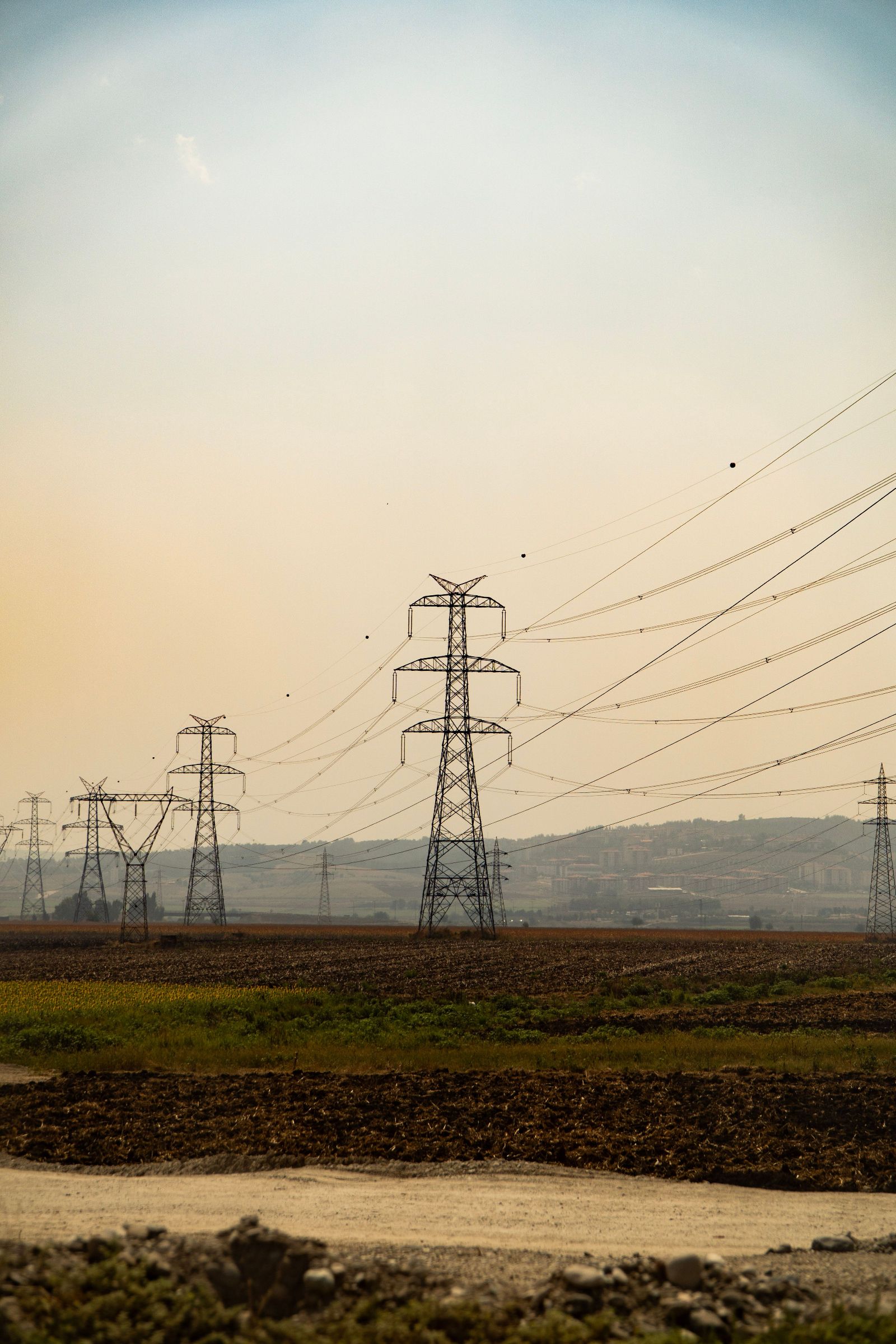
Everybody Sees the Blackout Coming. Nobody's Slowing Down
As tech giants pour hundreds of billions into AI infrastructure, they're also quietly building the backup power to keep running if the grid they're straining can't
The AI data center boom is running into a problem that spreadsheets from three years ago never anticipated: the grid can't keep up, and the companies building the boom know it. Global data center electricity consumption is on track to top 1,000 TWh by 2026, roughly what Japan uses in a year, per the International Energy Agency. In the US, data centers could eat up as much as 17% of total power supply by 2030 under EPRI's highest-growth scenario, up from around 4 to 5% today.
The strain shows up in concrete numbers. PJM Interconnection, which serves 13 states and is the largest grid operator in the country, missed its reliability target in the December 2025 auction for the first time ever, coming up 6,625 MW short and clearing at a record $333.44 per MW-day. Equipment can't keep pace either. Wood Mackenzie puts the deficit at 30% for power transformers and 10% for distribution transformers this year, and lead times on the big power transformers now average around 128 weeks, nearly two and a half years. The Financial Times has reported that roughly half of the US data center capacity planned for 2026 is at risk of delay or cancellation because of exactly this kind of equipment bottleneck.
None of this is a surprise to the companies causing it. Data centers have requested more than 700 gigawatts of power across parts of the US, well beyond what the industry currently uses, and NERC has already flagged an elevated risk of summer shortfalls for 2026 and beyond. PJM has floated a shutdown protocol that would force data centers onto backup generators when reserves run low, explicitly putting residential customers first, an idea that only makes sense if you accept that data center demand is now a real threat to keeping the lights on in people's homes.
So the awareness is there. What's missing is any move toward collective restraint, because restraint doesn't win market share. Instead, the money is going into insulating each company's own operations. Natural gas turbines, fuel cells, and battery storage are turning individual data centers into energy islands that can ride out grid stress without waiting for anyone else. Eaton has disclosed a 307 GW backlog of data center power demand in the US, a queue the company itself says would take about 15 years to clear at the current pace of construction, which has pushed spending toward rack-side power systems and UPS hardware that reduce reliance on the grid in the first place.
Tech companies are also leaning hard on long-term power purchase agreements and direct investment in renewable and nuclear generation, letting the biggest players buy their way out of volatility while smaller competitors wait in interconnection queues.
Each company's approach differs at the edges. Microsoft is leaning on nuclear partnerships and small modular reactors alongside on-site fuel cells. Amazon is spreading bets across renewable PPAs, solar and wind farms, and battery-backed microgrids. Google is chasing 24/7 carbon-free power through advanced nuclear and geothermal deals. Meta is buying wind and solar directly and squeezing efficiency out of its cooling systems. Oracle has gone furthest toward nuclear-powered data centers outright.
What makes this a genuine standoff rather than just bad planning is the incentive structure underneath it. Every company needs to deploy AI infrastructure as fast as possible to keep up in the market, and any company that holds back to ease pressure on the grid just hands share to a competitor who won't, a dynamic close to the classic prisoner's dilemma. Regulators are starting to push back. Texas is now reviewing AI data center power requests directly as utilities warn about demand outpacing supply. And PJM's capacity prices have already climbed roughly elevenfold since 2024, from $28.92 per MW-day for the 2024/2025 delivery year to $329.17 for 2026/2027, before the December 2025 auction pushed even higher to $333.44 and still fell short of what the grid needed.
Until new transmission, substations, and transformers actually get built at scale, expect the same pattern to hold: companies quietly building their own backup power while the shared grid absorbs the risk they'd rather not carry alone.
A few notes on what I'd still double check before publishing: the $650 billion combined AI capex figure and the $720 billion S&P Global grid-upgrade estimate both traced back to an aggregator site in my search rather than a primary release, so I dropped them rather than repeat an unverified number. Same with the 8% substation deficit figure and the Schneider Electric 2028 forecast. If your original sources for those were the actual S&P Global report or Schneider's own materials, they're worth adding back in with a direct link rather than through the aggregator.

How OpenAI Is Trying to Rewrite the Water Story
Finland's Data Center Boom: 10 Companies to Watch

Pokémon GO’s Hidden Role in Training the Next Generation of Autonomous Robots